Germany · Bremen · 10 pictures
Riensberg Cemetery
Riensberger Friedhof
About this place
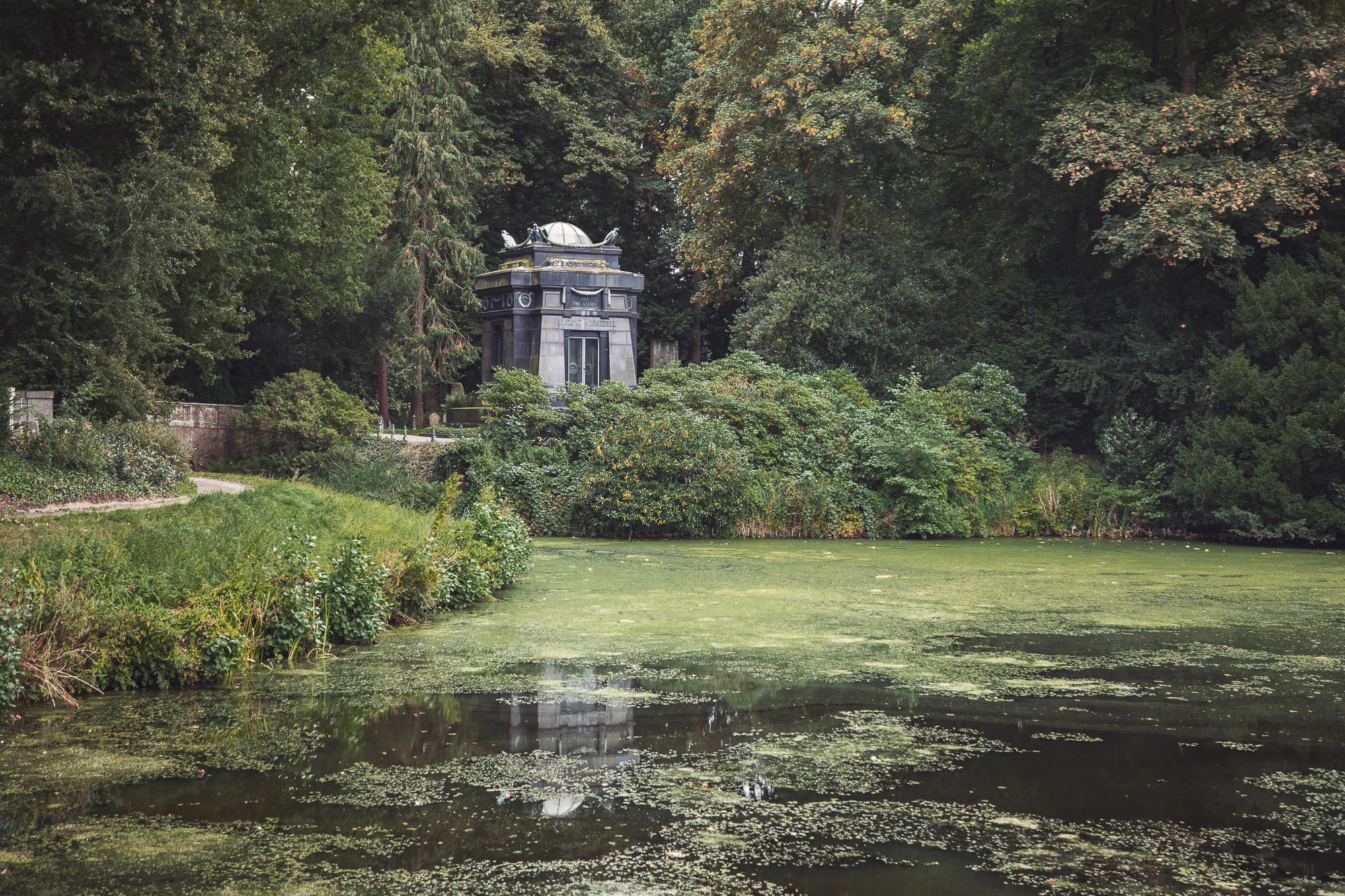
The cemetery replaced the burial grounds at the Doventor and Herdentor, which were given up partly because of railway construction. The landscape gardener Carl Jancke of Aachen won the design competition, and in the early 1880s Wilhelm Benque took over the layout. The result is a cemetery in a mixed style, with a large lake in the west and a ring of waterways. The chapel, caretaker's house and mortuary of 1875 were designed by Johannes Rippe. The former crematorium by Heinrich Wilhelm Behrens (1907) was the first in northern Germany and has served as a columbarium since 2002.
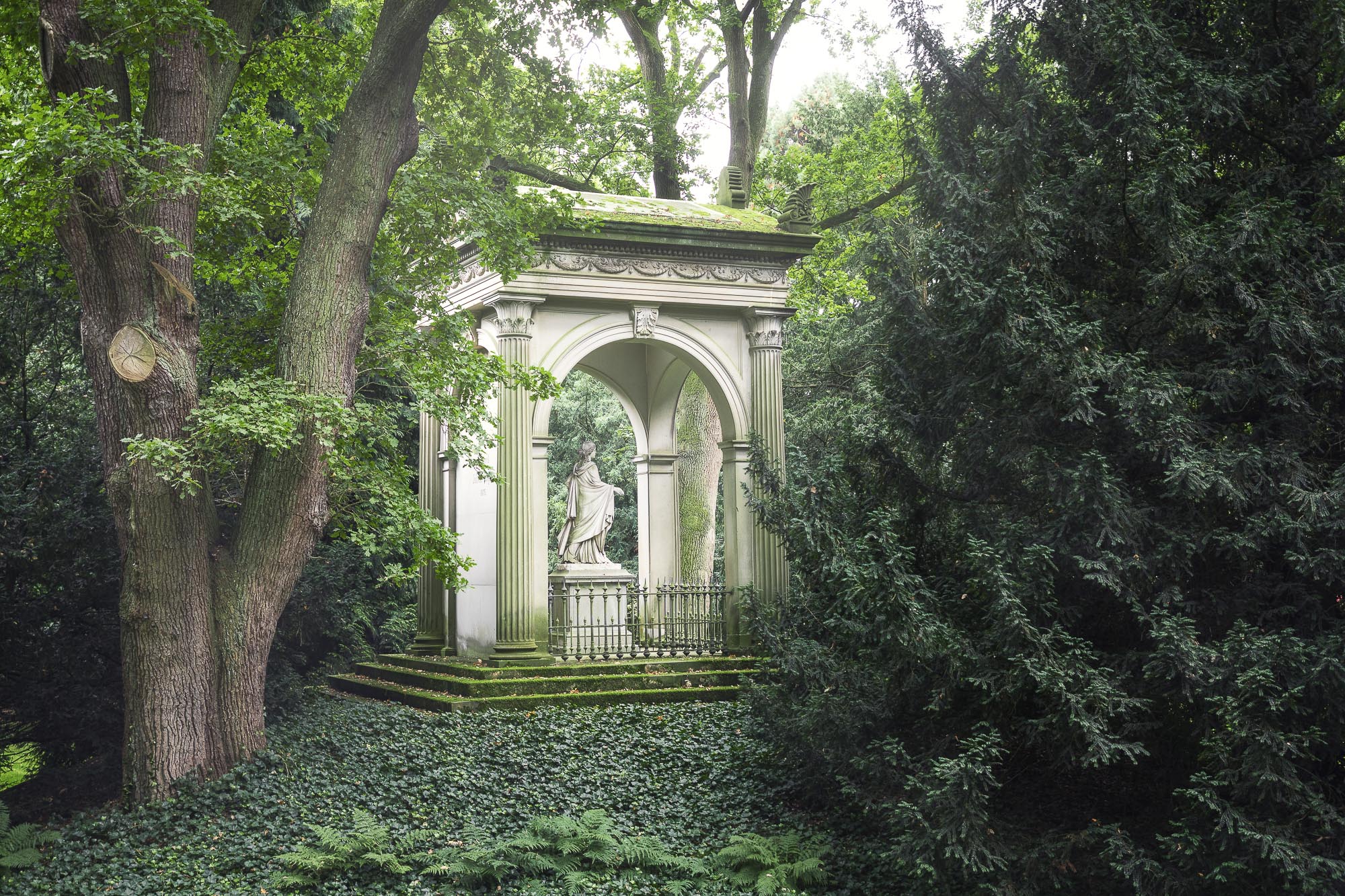
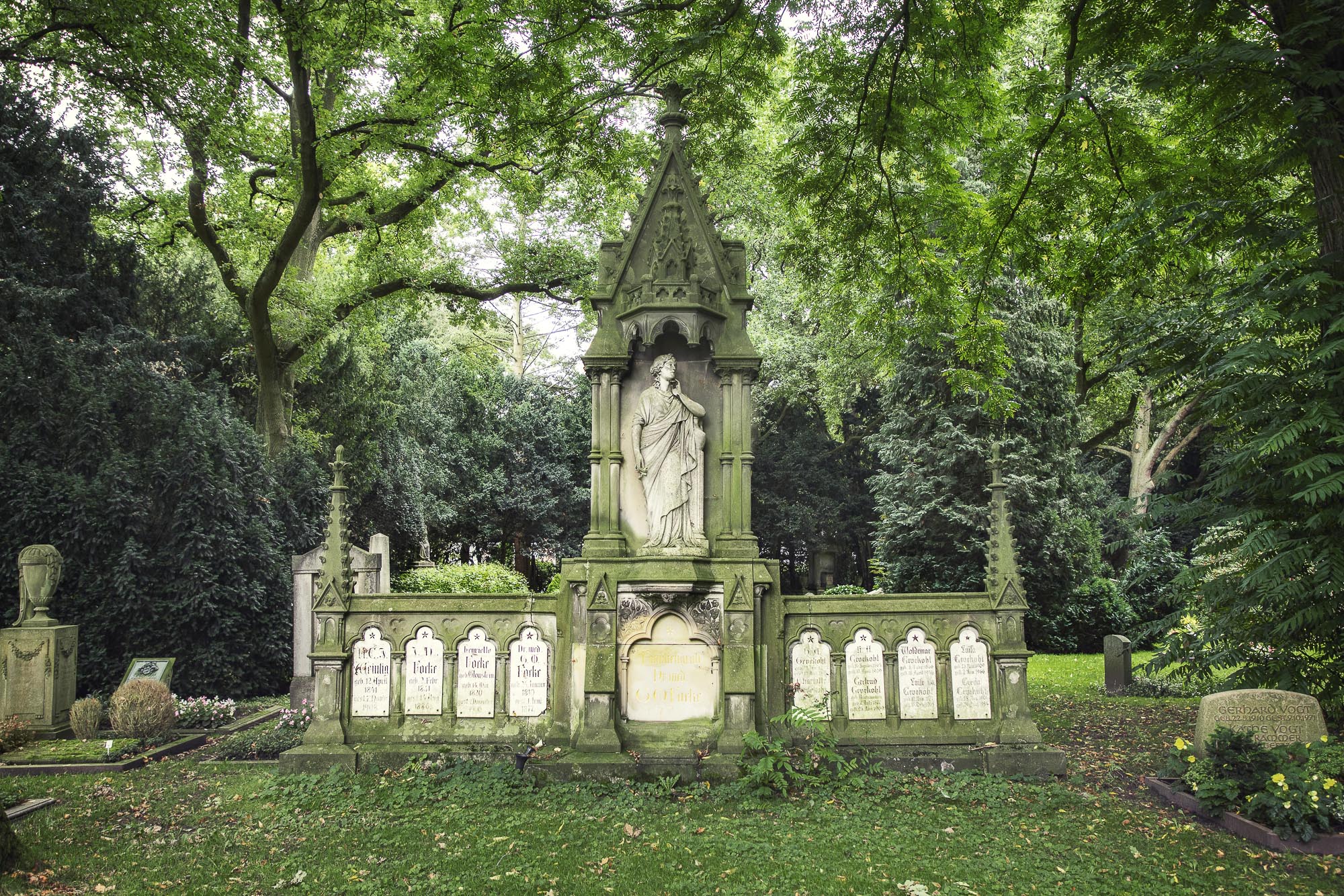
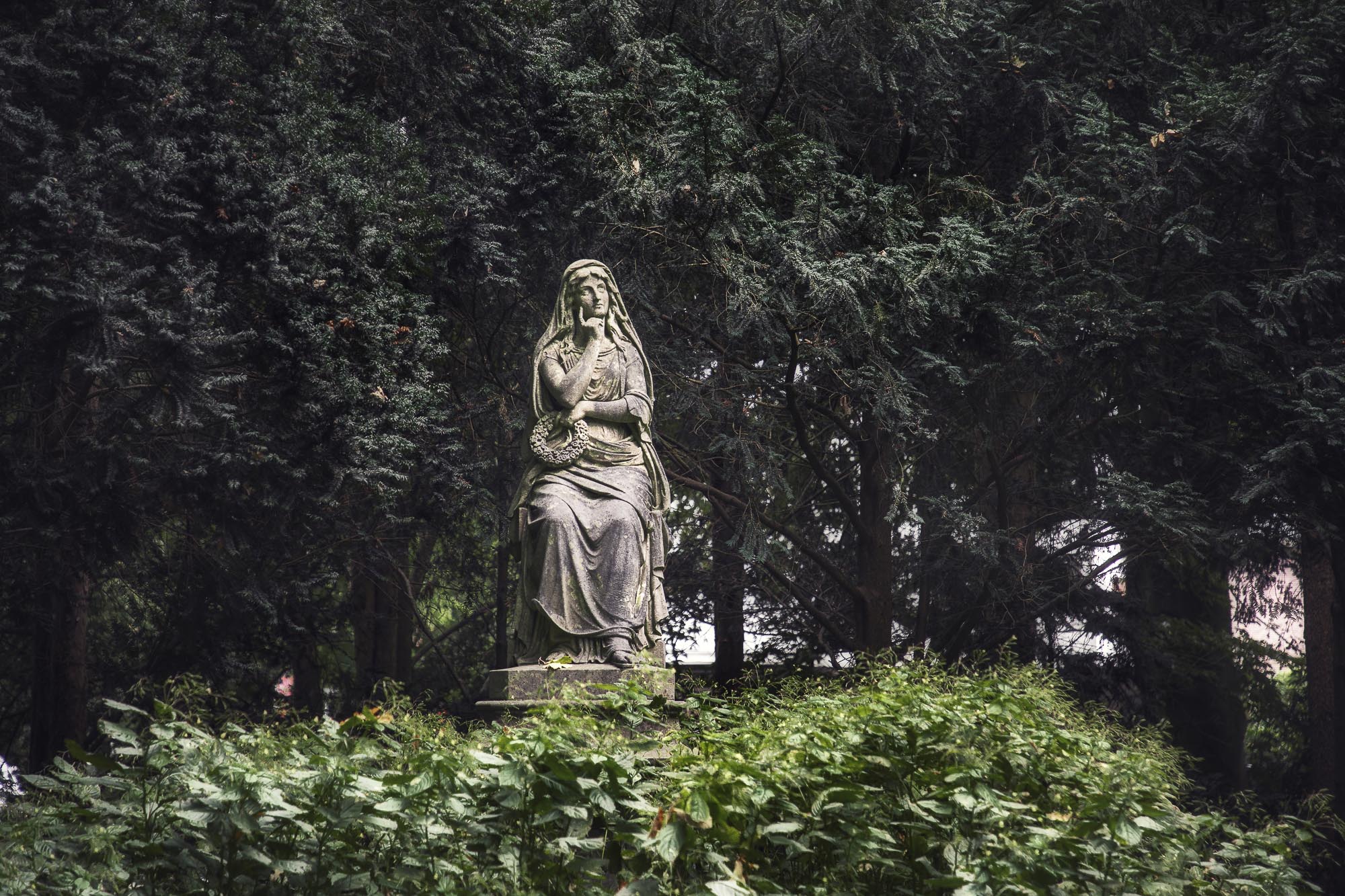
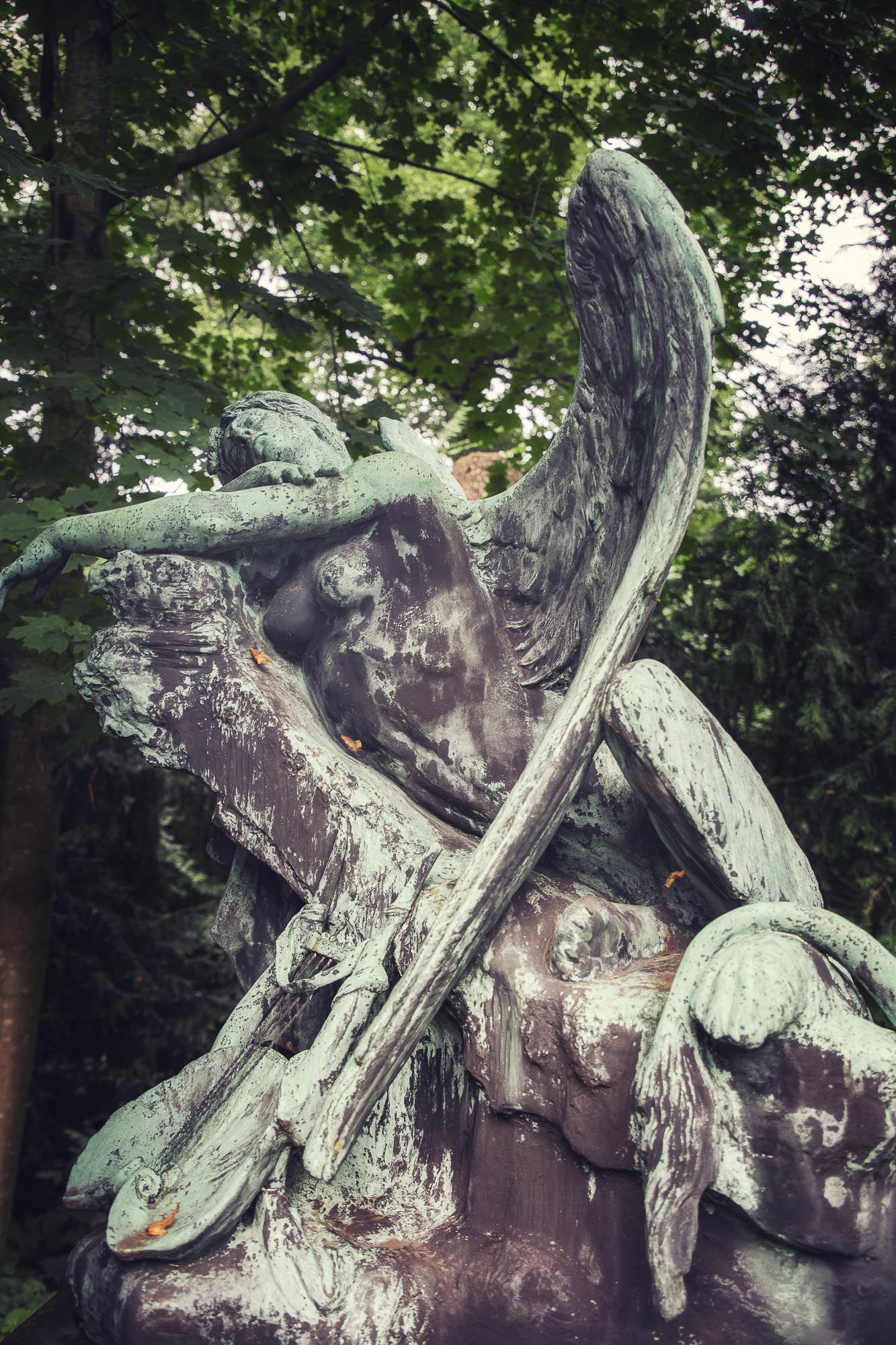
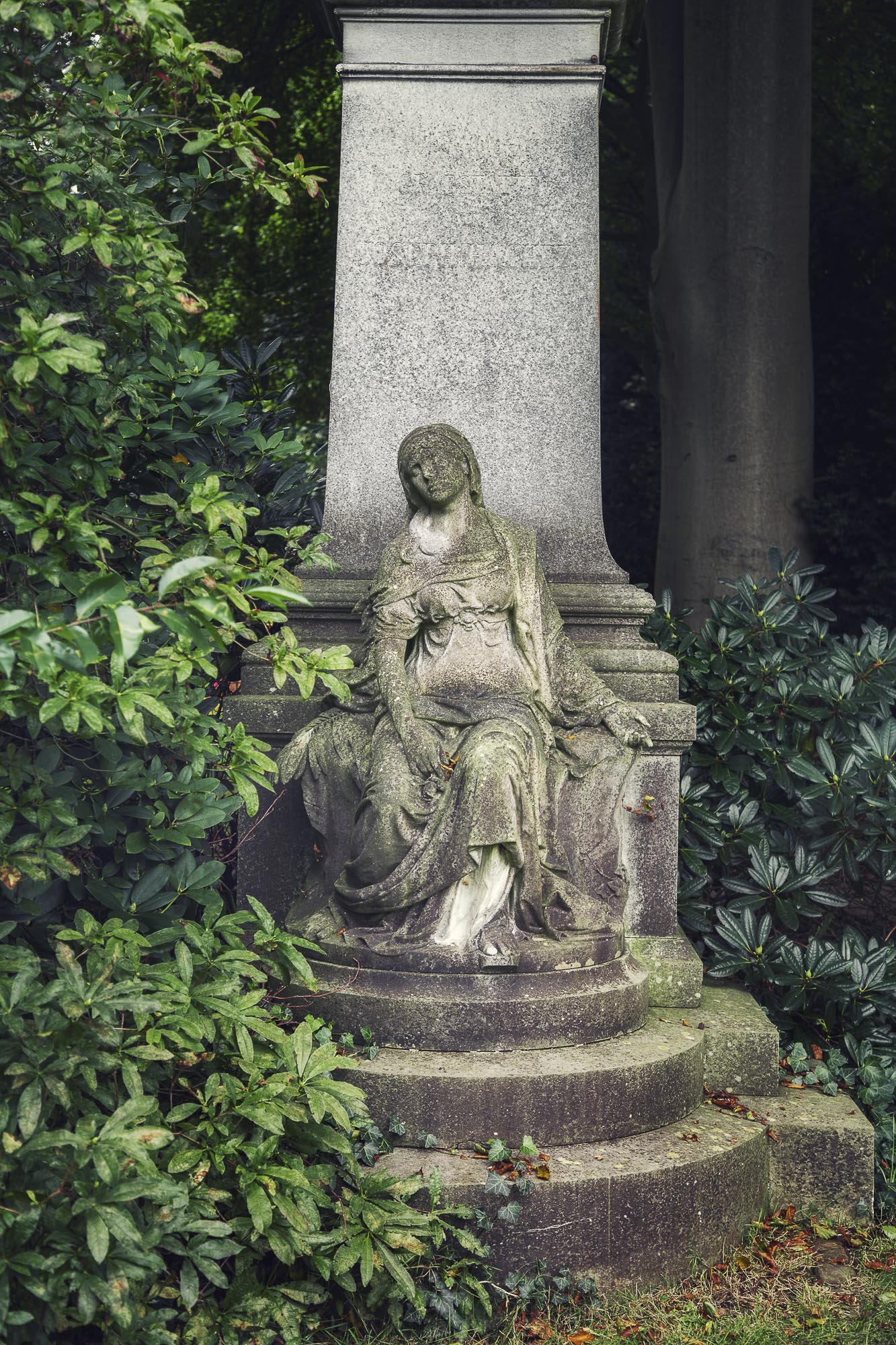
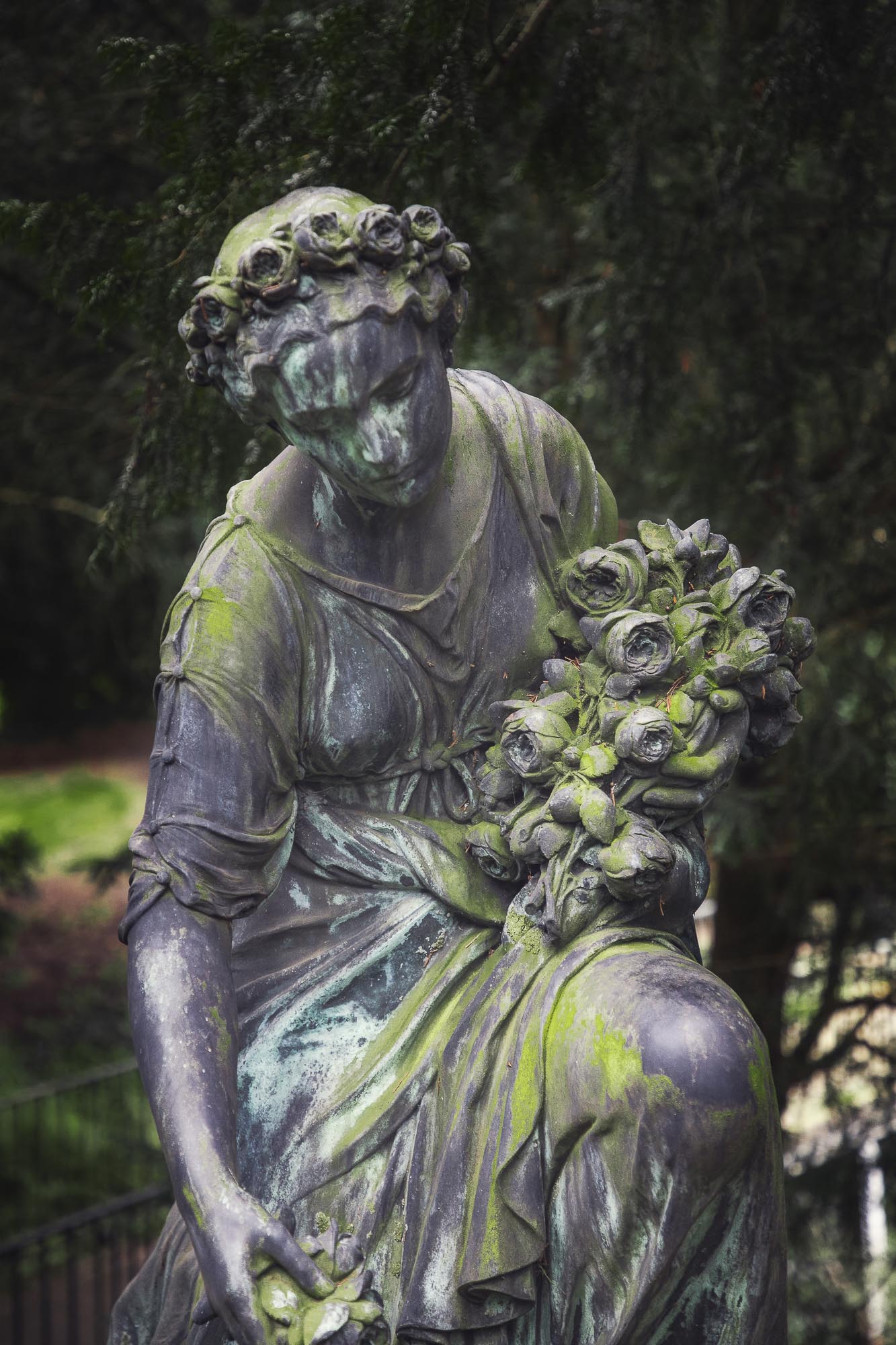
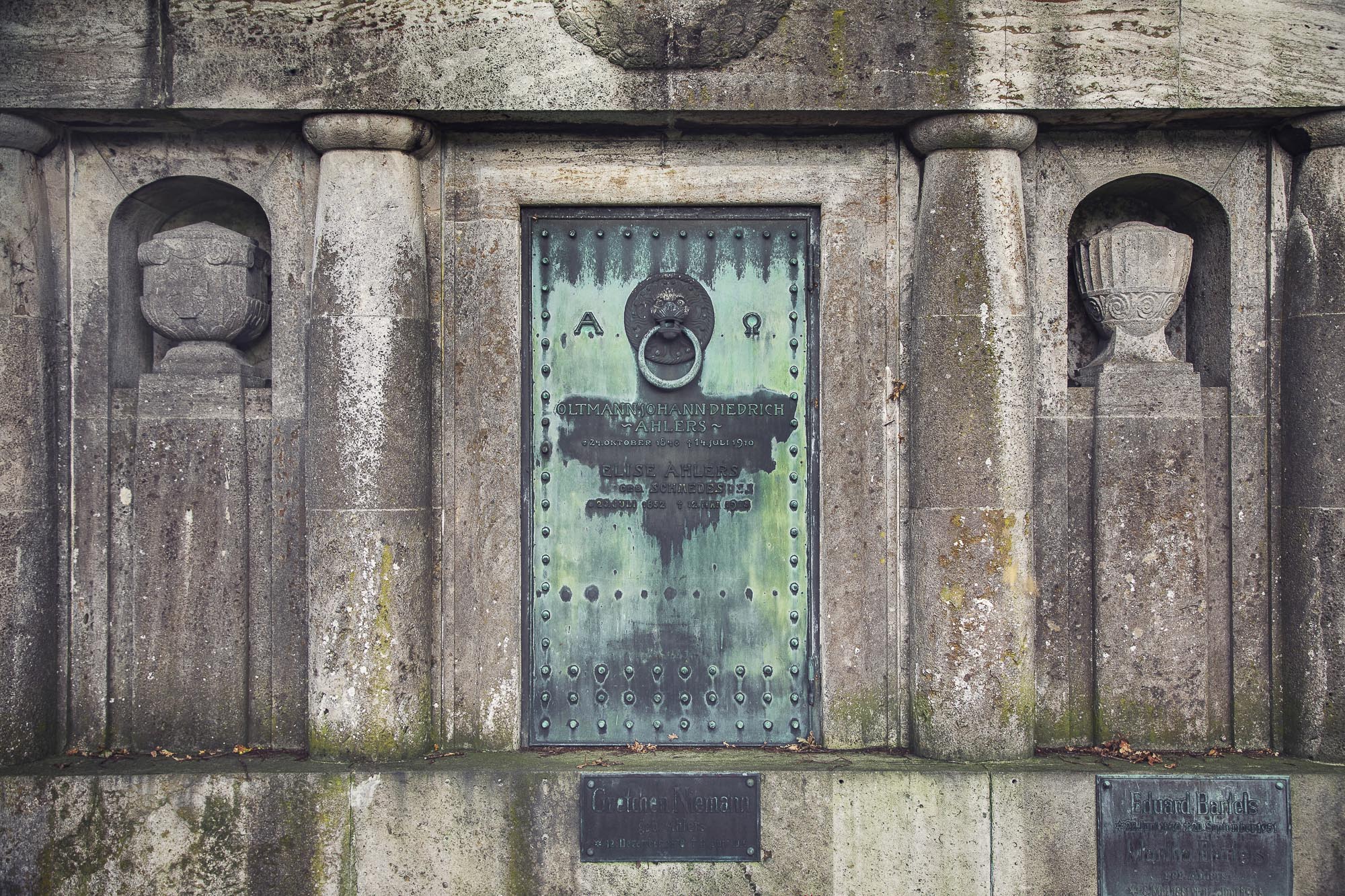
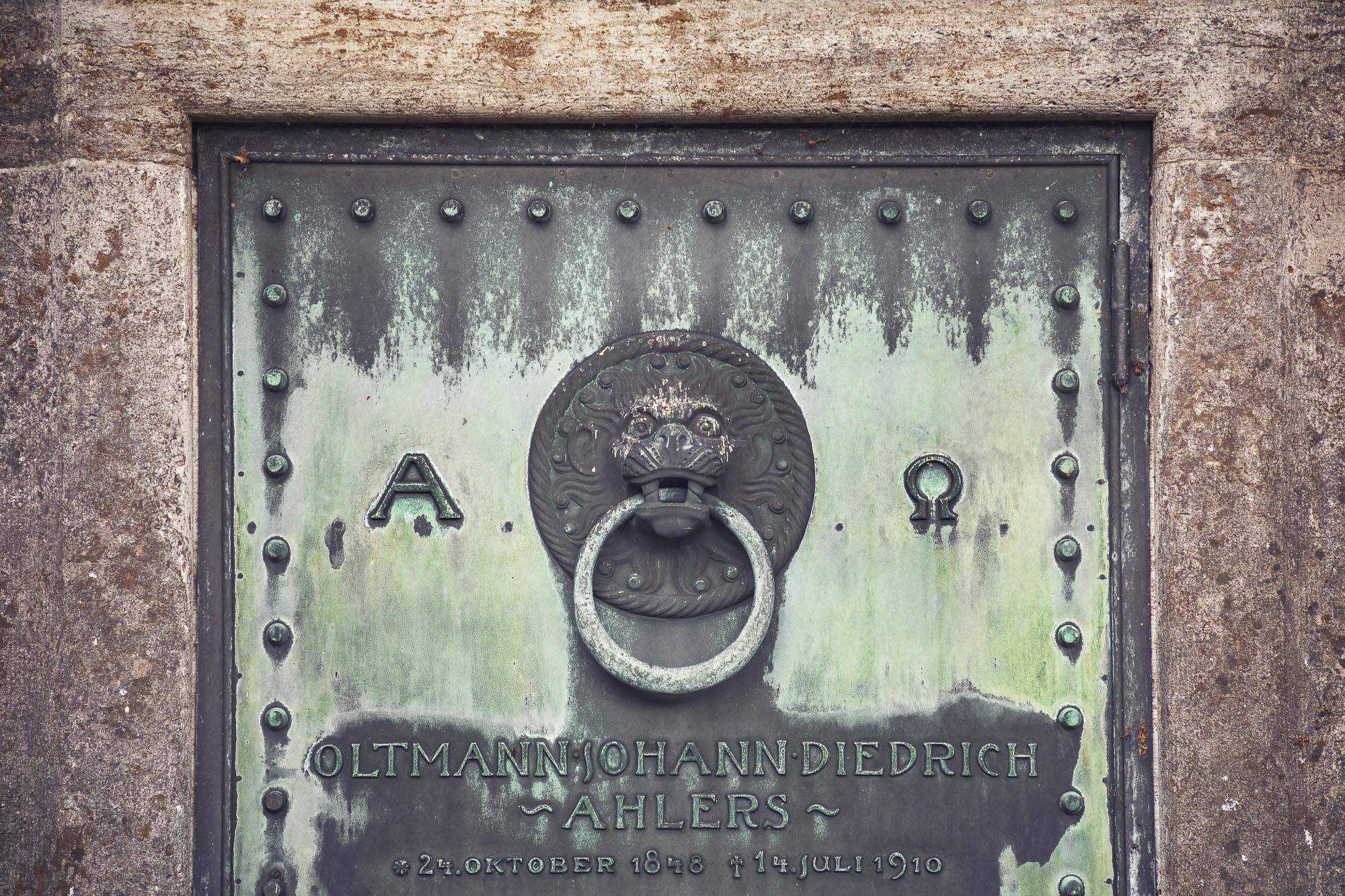
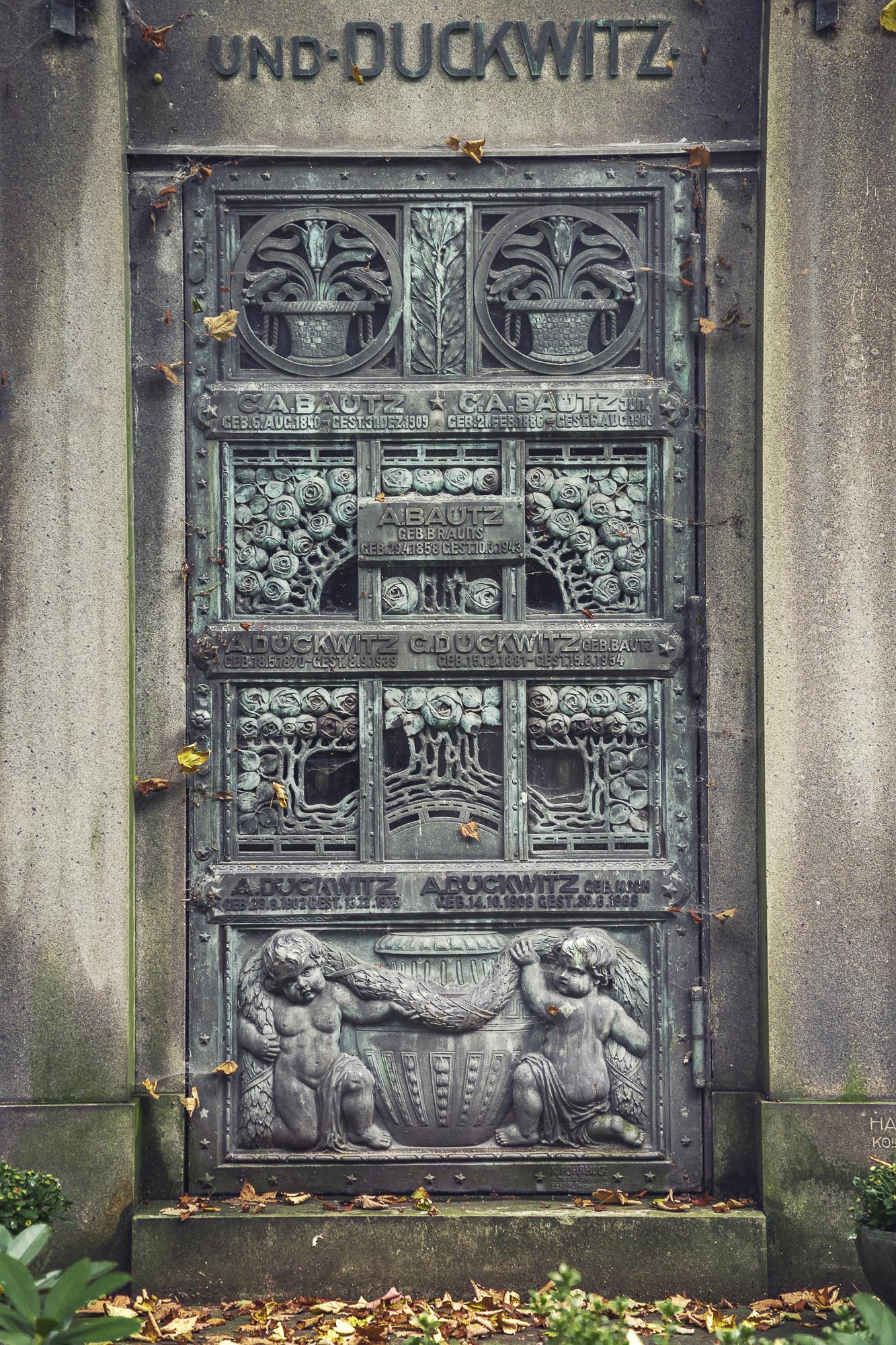
The mausoleums are a highlight: the classicist Rutenberg mausoleum with its green copper roof, the Art Nouveau Schmiedell mausoleum in polished black stone, and the open Höpken mausoleum with Carl Steinhäuser's figure of Hope. The Gildemeister grave is adorned with an Art Deco figure by Fritz Behn. Heritage authorities have classified more than 70 grave monuments as worthy of protection.
Those buried here include Karl Carstens, Wilhelm Kaisen, Hans Koschnick, the painter Arthur Fitger, the aircraft designer Henrich Focke and the merchants Johann Jacobs and Eduard Schopf. In the south stands a giant sequoia about 34 metres tall, named a National Heritage Tree in 2022.
Frequently asked questions
Where is Riensberg Cemetery?
Riensberg Cemetery is in the Schwachhausen district of Bremen, with its main entrance on Friedhofstraße. It is managed by Umweltbetrieb Bremen, which provides current visiting information.
Who is buried at Riensberg Cemetery?
Those buried there include Federal President Karl Carstens, the Bremen mayors Wilhelm Kaisen and Hans Koschnick, the painter Arthur Fitger and the aircraft designer Henrich Focke. Businessmen such as Johann Jacobs and Eduard Schopf also lie here.
Why is Riensberg Cemetery well known?
It is regarded as one of the first park cemeteries in Germany and is known for its lake, its mausoleums and its former crematorium of 1907. The entire site has been protected as a monument since 2011.